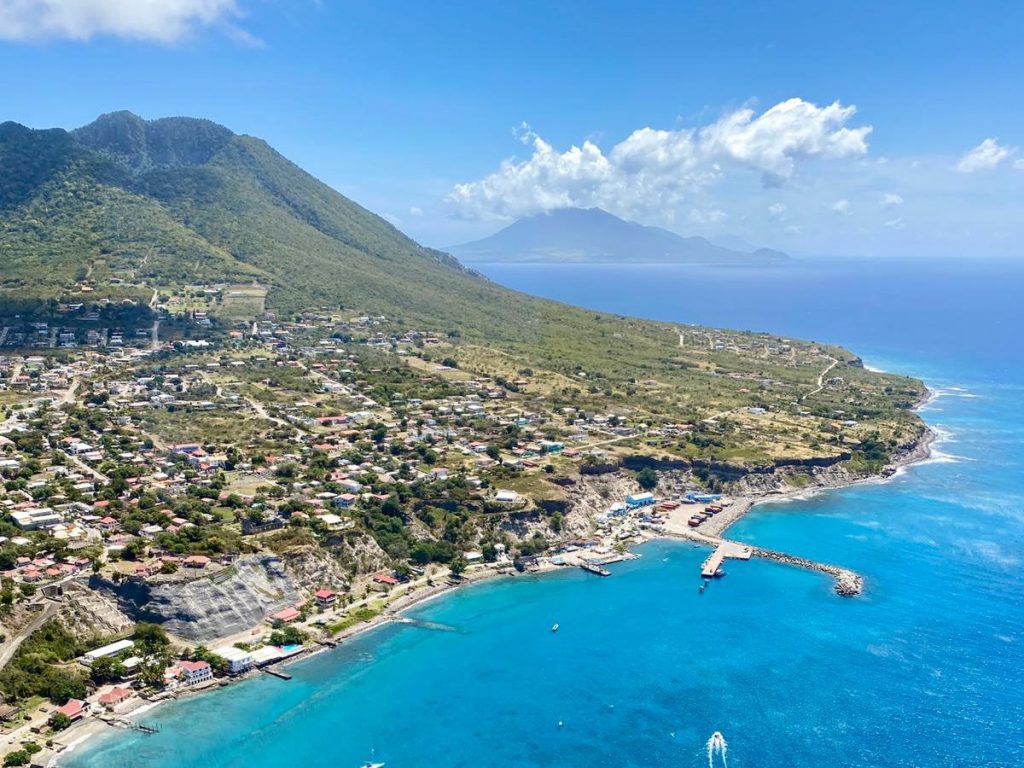
St. Eustatius — Statia to everyone who knows it — is the Caribbean island most people have never heard of and then can’t stop reading about. Eight square miles, a dormant volcano with a rainforest in its crater, about three thousand residents, and a harbour that was once the busiest free port in the Atlantic. If you have started wondering whether you could own something here, the answer is almost certainly yes. Here is how it works.
Can foreigners buy property on St. Eustatius?
Yes. Statia is a special municipality of the Netherlands, part of the Caribbean Netherlands alongside Saba and Bonaire. There are no nationality restrictions on property ownership — you do not need to be a Dutch or EU citizen, and you don’t need to live on the island to own a home or a parcel of land.
That is worth pausing on, because it is unusual. Across much of the Caribbean a foreign buyer faces licences, quotas, holding companies or government approval before a sale can close. On Statia an international buyer purchases on essentially the same footing as a local one, under Dutch civil law, with title recorded in a public register.
What makes Statia different from Saba
The two islands are twenty minutes apart by air and share a government structure, a currency and a legal system — and they are not remotely alike to live on.
- There is more room. Statia is roughly eight square miles to Saba’s five, and much of it is gently sloping rather than vertical. Building plots are larger, flatter and considerably cheaper.
- It has a town. Oranjestad is a real historic centre — an upper town on the cliff, a lower town along the waterfront, and the ruins of the 18th-century warehouses that made the island rich.
- The economy is different. Saba leans on its medical school and dive tourism. Statia has a fuel terminal, a government seat, and a far smaller visitor industry, which keeps prices down and crowds away.
- It is not a resort island. There are no chain hotels and no cruise berths. People come for the diving, the hiking and the history, or they come to live.
Our side-by-side comparison goes further into which island suits which kind of life.
What you can buy
The Statia market is small enough that you can see most of it in an afternoon. Broadly it falls into three groups:
- Villas and family homes. At the upper end these are substantial properties on large grounds — Villa Frangipani, a Balinese-inspired estate in the Knippenga Estate above Golden Rock, is currently our flagship listing at $1,399,000.
- Land. This is where most buyers start. Union Estate is listed at $650,000 — a parcel rather than a lot in a development, with views that nobody can build in front of.
- Town property. Older houses in and around Oranjestad, some of them historic, which come with character and with the maintenance that character implies.
Everything currently available is on our properties page, and the island page has more on what living here is actually like.
The buying process, step by step
The mechanics will feel familiar to anyone who has bought in Europe, and reassuringly boring to anyone expecting Caribbean improvisation.
- See it. Photographs do not tell you about the trade winds, the road, or the neighbours. Almost every buyer visits first.
- Make an offer. We put it to the seller and negotiate on your behalf.
- Agreement. Once terms are settled, a purchase agreement is drawn up and a deposit is usually placed with the notary.
- The notary does the work. A civil-law notary — a public official, not a hired advocate for either side — checks title, settles any encumbrances, prepares the deed of transfer and registers it.
- Transfer. The deed is signed and recorded, funds are released, and the property is yours in freehold.
Costs beyond the purchase price include notary fees, registration and transfer tax. These vary with the property and change over time, so we will not quote a percentage here that might be out of date by the time you read it — ask us and we will give you current figures for the specific property, and the notary will confirm them in writing.
Does buying property give me residency?
No. Owning a home on Statia and having the right to live there year-round are two separate things, and the first does not grant the second. Many owners use their property for part of the year without difficulty. If you intend to move permanently, residency runs through the Dutch immigration authorities on its own track — our residency orientation covers the shape of it for the Caribbean Netherlands, and anything specific should be confirmed with the authorities directly.
Getting here to look
Fly to Sint Maarten (SXM), which has direct service from North America and Europe, then take the Winair flight to Statia — around twenty minutes over open water, landing at F.D. Roosevelt Airport. Tell us your dates and we will arrange viewings around your trip, and point you at somewhere to stay.
Why people are looking at Statia now
For most of the past century Statia has been overlooked, which is precisely why it is still affordable and still itself. That is changing a little. On 16 November 2026 the island marks the 250th anniversary of the First Salute — the morning in 1776 when the guns of Fort Oranje answered the American brig Andrew Doria, making Statia the first place in the world to acknowledge the flag of the United States. The anniversary is drawing attention the island has not had in a long time.
Attention is not a reason to buy. But it is a reasonable moment to look, while the market is still quiet and the inventory is still small enough to understand properly.
Ready to take the next step?
We work across both islands with a local team, so you get the same people whether you end up on Statia or on Saba. Browse the current listings, read about the island itself, or tell us what you are looking for — including the budget you have in mind and whether you want a house or a piece of land — and we will tell you honestly what is available and what it is like.
This article is general information, not legal, tax or immigration advice, and listing prices reflect our inventory as of September 2026. Purchase costs, tax treatment and residency requirements change — please confirm the details for your situation with a civil-law notary and the relevant Dutch authorities before you commit.